
Use this template
Add your own experience and make this layout yours.
Resume Example
Jordan Miller
Licensed Electrician
[email protected] | +1 (503) 987-6543 | linkedin.com/in/ethan-hicks | ehicks-electrician.com | Portland, OR
Professional Summary
Licensed electrician with 7 years of experience across commercial build-outs, industrial maintenance, solar installations, and service calls. Known for reading blueprints accurately, tracing faults quickly, coordinating inspections, and completing code-compliant work with minimal rework. Brings hands-on strength in panel upgrades, conduit runs, lighting retrofits, battery storage systems, and preventive maintenance.
Work Experience
Renewable Energy Specialist
09/2022
Green Energy Solutions LLC
Portland, OR
•
Installed a 50 kW rooftop solar array for a commercial venue, coordinating conduit routing, inverter setup, and final inspection without delaying the site schedule.
•
Created maintenance checklists for 30 residential solar systems, helping technicians spot loose terminations, weather damage, and inverter alerts earlier.
•
Coordinated with local inspectors on 20 new installations, preparing documentation and correcting punch-list items before final sign-off.
•
Diagnosed and repaired a battery storage fault at an industrial site, restoring backup power readiness before the next scheduled production shift.
Electrician
03/2019 - 08/2022
Electrical Services Corp
Seattle, WA
•
Retrofitted 50 office lighting fixtures with high-efficiency replacements, improving visibility while reducing avoidable energy use.
•
Installed branch circuits, panels, and distribution equipment for a 5-story residential project while following local code, lockout/tagout, and documentation requirements.
Solar Installation Technician
01/2018 - 02/2019
Bolt Energy Co.
Boise, ID
•
Installed rooftop solar systems across 20 homes, contributing more than 75 kW of added residential generation capacity.
•
Troubleshot wiring, inverter, and grounding issues in residential solar installations, reducing repeat service visits for customers.
Skills
Solar panel installation, Battery storage systems, Smart grid integration, Energy efficiency assessment, SolarPro, Solmetric SunEye, Fluke 87V True RMS Multimeter, ETAP Power Systems Analysis Software
Education
Bachelor's Degree in Electrical Engineering with a Concentration in Renewable Energy Technologies
09/2013 - 05/2017
Oregon State University
Corvallis, OR
Projects
Community Center Solar Upgrade
Designed and installed a small solar system for a community center, including load review, roof-layout planning, conduit routing, and handoff documentation for ongoing maintenance.
Battery Storage Troubleshooting Playbook
Created a field checklist for diagnosing common battery storage alerts, helping junior technicians document symptoms, isolate likely causes, and escalate safely when needed.
Certifications
Solar Energy System Maintenance Specialist
06/2025
Advanced Smart Grid Technology
03/2024
This resume format works exceptionally well for ATS optimization because it incorporates a clear professional summary that highlights relevant experience and skills specific to an Electrician role. The inclusion of technical keywords such as 'power distribution' and 'safety compliance' helps the resume pass through HR software filters effectively, ensuring that the candidate's qualifications are seen by hiring managers. Additionally, the use of a structured format with distinct sections for work experience, education, certifications, and skills makes it easy for both ATS systems and human readers to quickly scan and understand the candidate’s background.
Instant Resume Score
Upload your resume for an instant ATS score and practical, role-specific improvements.
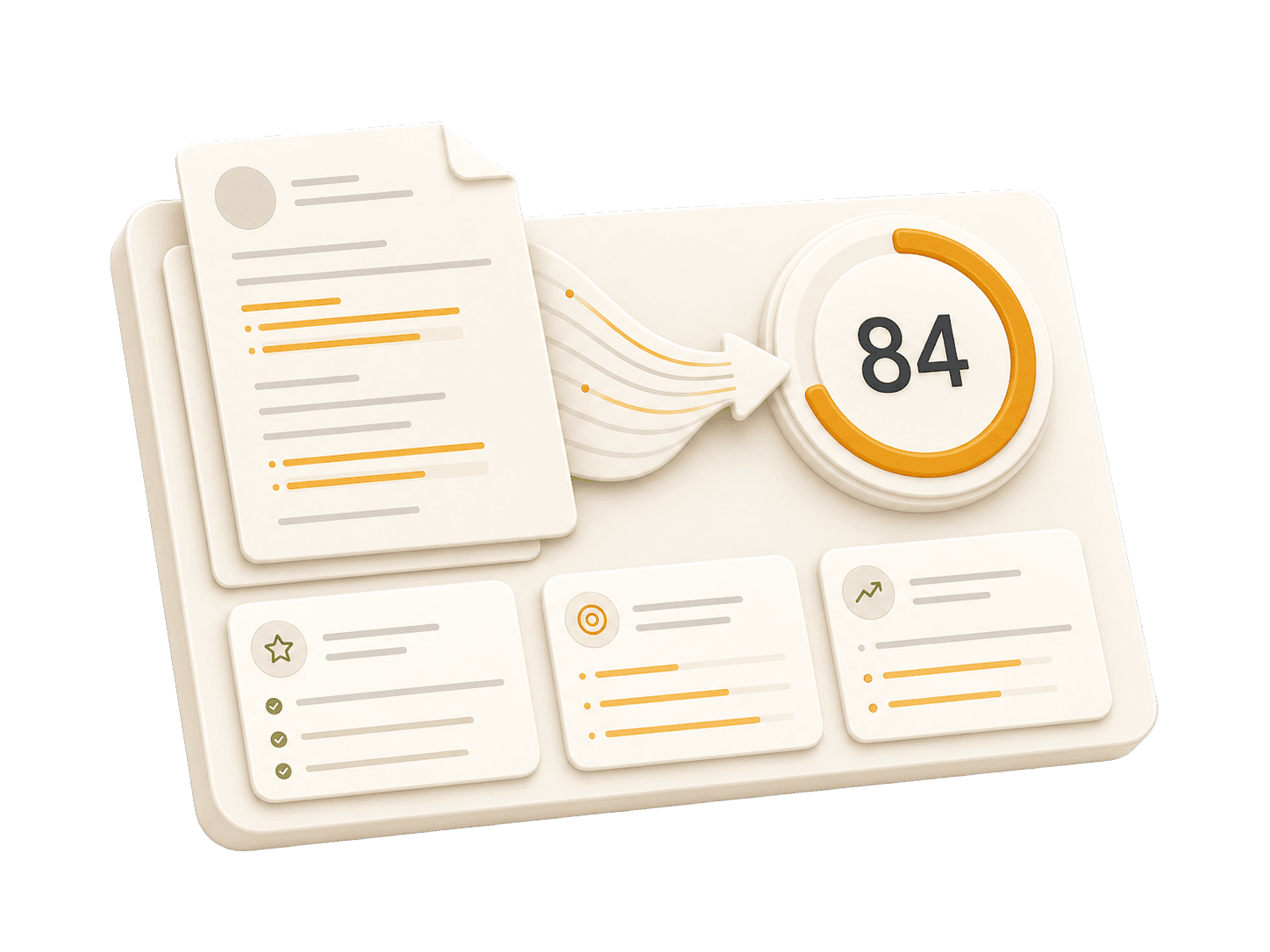
Add your resume to run a free score and get prioritized fixes.
Expert guidelines and best practices for each section of your resume.
01
First Name Last Name City, State, Zip Code Phone Number | Email Address LinkedIn Profile URL | Portfolio URL (Optional)
Your contact information is the first section recruiters see. Keep it concise and professional. Ensure your email address is appropriate (e.g., [email protected]). Include your LinkedIn profile for a comprehensive view of your professional journey. A portfolio or personal website is recommended for creative, technical, or design roles.
Do not include your full physical address (street number/name) for privacy reasons. Avoid including personal details like marital status, age, photo, or social security number unless specifically required in your country. Don't use unprofessional email addresses.
See clear examples of how to format contact details effectively.
John Doe 1234 Random St, Apt 56 New York, NY 10001 [email protected] github.com/aliciacode Single, 28 years old
John Doe New York, NY (555) 123-4567 | [email protected] linkedin.com/in/johndoe | github.com/johndoe | johndoe.dev
02
Professional Title Result-oriented [Role Name] with [Number] years of experience in [Key Skills/Industries]. Proven track record of [Major Achievement]. Skilled in [Key Technologies/Skills]. Committed to delivering [Specific Value] for [Target Industry/Company type].
A professional summary is your elevator pitch. It should be 3-5 sentences long, summarizing your experience, key skills, and major achievements. Tailor it to the job description by using relevant keywords. Focus on what makes you unique and the value you bring to potential employers.
Avoid generic objectives like 'Looking for a challenging role to grow my skills.' Recruiters want to know what value you bring to them, not what you want from them. Don't use first-person pronouns (I, me, my). Keep it concise and impactful.
Compare a weak objective with a strong professional summary.
Objective: I am a hard-working individual looking for an Electrician position where I can learn new things and advance my career.
Certified Electrical Specialist with over 10 years of experience in renewable energy systems, including solar panel installations and battery storage solutions. Spearheaded the installation of over 50 large-scale solar panel systems and contributed to reducing operational costs by $30,000 annually for a major client. Skilled in SolarPro system design software and committed to driving sustainable practices.
03
Technical Skills - Languages: [List] - Frameworks: [List] - Tools: [List] Soft Skills - [Skill 1], [Skill 2], [Skill 3]
Group your skills logically (e.g., Technical Skills, Soft Skills). Focus on hard skills relevant to the job. List skills in order of proficiency or relevance. Soft skills are better demonstrated through bullet points in your experience section rather than a bare list.
Do not list skills you are not comfortable using in an interview. Avoid using progress bars or percentages to rate your skills (e.g., "Java: 80%"). Do not include outdated technologies unless specifically required for the position.
Practical example showing do's and don'ts for skills
Outdated software like AutoCAD 2010 when newer versions are available.
Current software tools such as Revit MEP or SketchUp for design work.
Listing soft skills in a separate category without demonstrating them through experience bullet points.
Use an example like "Coordinated with city inspectors to pass safety checks on 20 new electrical installations, reducing rework time by 50%."
04
Job Title | Company Name | Location Month Year – Month Year - Action Verb + Context + Result (Quantified) - Led [Project] resulting in [Outcome]... - Collaborated with [Team] to implement [Feature]...
This is the core of your resume. Use reverse-chronological order (most recent first). Start each bullet with a strong action verb. Focus on achievements and impact, not just duties. Use numbers to quantify your impact (dollars, percentages, time saved, users affected). Show progression and increasing responsibility.
Avoid passive language like "Responsible for..." or "Tasked with...." Don't list every single daily task; focus on significant contributions and measurable outcomes. Avoid jargon that recruiters outside your field won't understand.
Practical example showing do's and don'ts for experiences
Responsible for repairing electrical issues at various sites.
Troubleshot and repaired a faulty battery storage unit at an industrial site, preventing potential power outages.
Part of the team that installed solar panels.
Led the installation of over 50 large-scale solar panel systems and battery storage units for both residential and commercial clients.
05
Degree Name | University Name | Location Month Year – Month Year - Relevant Coursework: [Course 1], [Course 2] - Honors/Awards: [Award Name] - GPA: X.X (if above 3.5)
List your highest degree first. If you have significant work experience, keep the education section brief. Include your GPA only if it is above 3.5 or if you are a recent graduate. Highlight relevant coursework, academic projects, honors, or leadership roles.
Do not include high school details if you have a college degree. Avoid listing every single course you took; select only the most relevant ones. Don't include graduation dates from decades ago if age discrimination is a concern in your field.
Bachelor of Science in Electrical Engineering | University of Oregon | Eugene, OR September 2013 – May 2017 - Coursework: Introduction to Calculus, Basic Programming, and Principles of Management
Bachelor's Degree in Electrical Engineering with a Concentration in Renewable Energy Technologies | Oregon State University | Corvallis, OR September 2013 – May 2017 - Relevant Coursework: Solar Photovoltaic Systems Design & Installation, Power Electronics and Electric Drives, Renewable Energy Technology - Honors/Awards: Dean's List (Semester), Outstanding Leadership Award
06
Project Name | Tools/Technologies Used - Briefly describe what you created and its purpose - Highlight specific challenges you solved - Link to portfolio or demo if available
Projects are excellent for demonstrating practical skills, especially if you lack work experience or are changing careers. Include a link to your portfolio or demo if possible. Focus on projects that show problem-solving skills and relevant tools for the target role.
Don't include trivial tutorials unless you significantly expanded on them. Avoid projects that are outdated, incomplete, or irrelevant to the role you're applying for. Don't just list technologies—explain what you created and why it matters.
Practical example showing do's and don'ts for projects
Designed a basic solar panel system using free online templates without adding custom features or solving unique challenges.
Created an efficient residential solar panel installation that reduced energy costs by 40%, including innovative solutions like integrated battery storage and smart grid connectivity.
Common questions about this role and how to best present it on your resume.
Include license level, electrical systems you have worked on, code knowledge, safety practices, tools, project types, and measurable examples such as inspections passed, systems installed, or service calls resolved.
Turn daily tasks into outcome-focused bullets. Mention the system, site type, action you took, and result, such as reducing rework, passing inspection, restoring power, or improving maintenance readiness.
Yes. List active licenses, apprenticeship or journeyman status, safety training, and relevant solar, industrial, or low-voltage credentials when they match the job posting.
Keep the resume focused on current readiness. Add relevant coursework, continuing education, side projects, volunteer repair work, or license renewal activity if it helps explain how you kept your trade skills current.
Join thousands who transformed their careers with AI-powered resumes that pass ATS and impress hiring managers.
Recruiters scan resumes for an average of only 6 to 7 seconds. Our proven templates are designed to capture attention instantly and keep them reading.