
Use this template
Add your own experience and make this layout yours.
Resume Example
This resume format is designed to be highly effective for Applicant Tracking Systems (ATS) by including relevant keywords specific to cybersecurity such as 'cloud security', 'threat intelligence', and 'risk management'. The inclusion of professional titles like 'Senior Cloud Security Specialist' ensures that the ATS recognizes the candidate's level of expertise. Additionally, the summary section highlights achievements in reducing organizational risk, which is crucial for securing positions in competitive IT sectors.
Instant Resume Score
Upload your resume for an instant ATS score and practical, role-specific improvements.
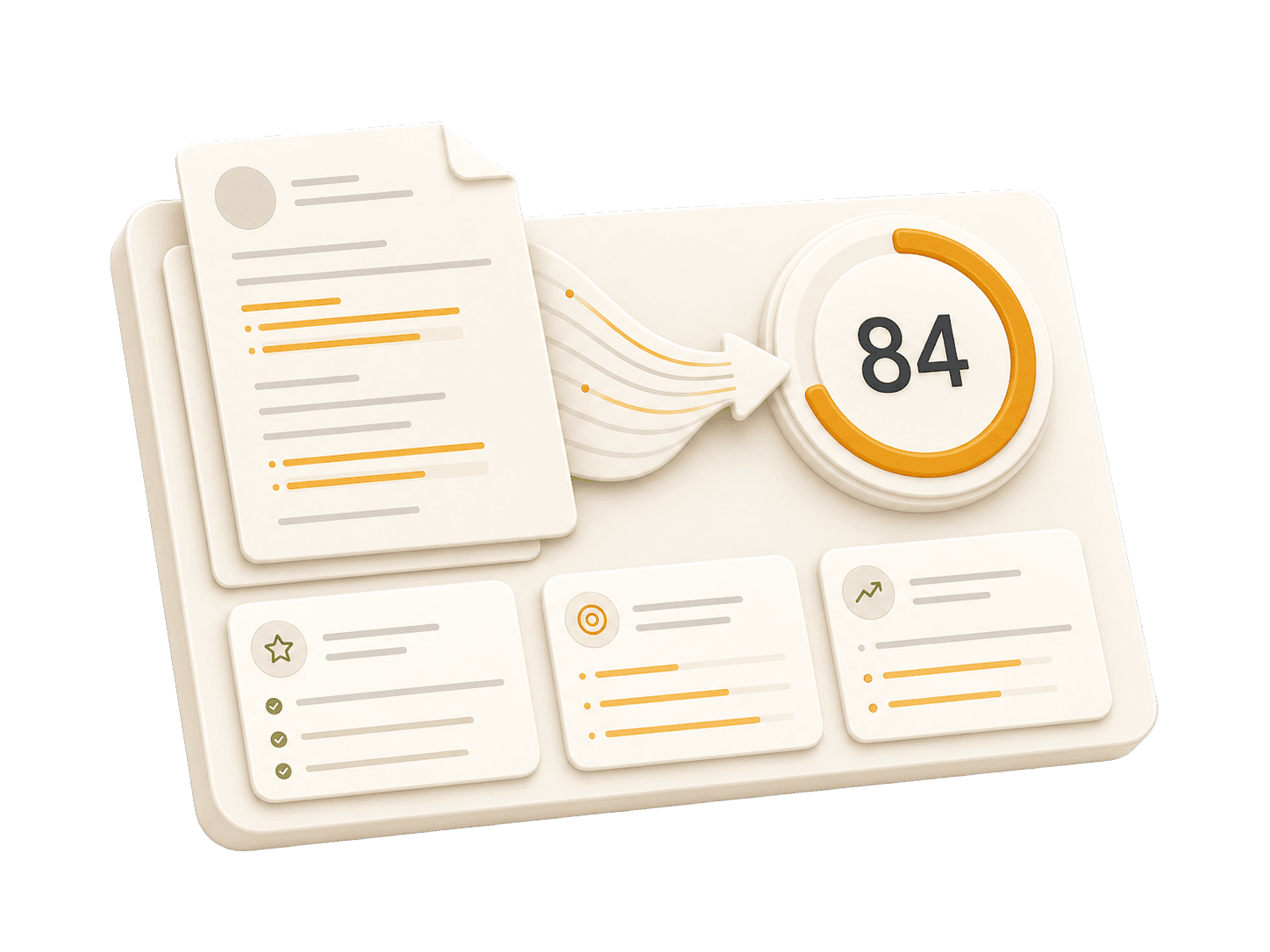
Add your resume to run a free score and get prioritized fixes.
Expert guidelines and best practices for each section of your resume.
01
First Name Last Name City, State, Zip Code Phone Number | Email Address LinkedIn Profile URL | Portfolio URL (Optional)
Your contact information is the first section recruiters see. Keep it concise and professional. Ensure your email address is appropriate (e.g., [email protected]). Include your LinkedIn profile for a comprehensive view of your professional journey. A portfolio or personal website is recommended for creative, technical, or design roles.
Do not include your full physical address (street number/name) for privacy reasons. Avoid including personal details like marital status, age, photo, or social security number unless specifically required in your country. Don't use unprofessional email addresses.
See clear examples of how to format contact details effectively.
John Doe 1234 Random St, Apt 56 New York, NY 10001 [email protected] github.com/aliciacode Single, 28 years old
John Doe New York, NY (555) 123-4567 | [email protected] linkedin.com/in/johndoe | github.com/johndoe | johndoe.dev
02
Professional Title Result-oriented [Role Name] with [Number] years of experience in [Key Skills/Industries]. Proven track record of [Major Achievement]. Skilled in [Key Technologies/Skills]. Committed to delivering [Specific Value] for [Target Industry/Company type].
A professional summary is your elevator pitch. It should be 3-5 sentences long, summarizing your experience, key skills, and major achievements. Tailor it to the job description by using relevant keywords. Focus on what makes you unique and the value you bring to potential employers.
Avoid generic objectives like 'Looking for a challenging role to grow my skills.' Recruiters want to know what value you bring to them, not what you want from them. Don't use first-person pronouns (I, me, my). Keep it concise and impactful.
Compare a weak objective with a strong professional summary.
Objective: I am a hard-working individual looking for a Cybersecurity Consultant position where I can learn new things and advance my career.
Senior Cybersecurity Consultant with 6+ years of experience improving cloud security controls, incident response, and vulnerability remediation. Built AWS monitoring and risk reporting workflows that helped engineering teams prioritize critical findings and reduce escalation delays.
03
Technical Skills - Languages: [List] - Frameworks: [List] - Tools: [List] Soft Skills - [Skill 1], [Skill 2], [Skill 3]
Group your skills logically (e.g., Languages, Frameworks, Tools). Focus on hard skills relevant to the job. List skills in order of proficiency or relevance. Soft skills are better demonstrated through bullet points in your experience section rather than a bare list.
Do not list skills you are not comfortable using in an interview. Avoid using progress bars or percentages to rate your skills (e.g., "Java: 80%"). Do not include outdated technologies unless specifically required.
Practical example showing do's and don'ts for skills
Listed skills with subjective proficiency ratings, such as 'Python: Advanced', which is vague and does not provide clear information to recruiters or hiring managers.
Clearly listed Python under Languages with no additional qualifiers.
Included outdated technologies like Windows XP in the Tools section, despite these being irrelevant for modern cybersecurity roles.
Focused on current tools such as AWS GuardDuty and Azure Security Center.
04
Job Title | Company Name | Location Month Year – Month Year - Action Verb + Context + Result (Quantified) - Led [Project] resulting in [Outcome]... - Collaborated with [Team] to implement [Feature]...
This is the core of your resume. Use reverse-chronological order (most recent first). Start each bullet with a strong action verb. Focus on achievements and impact, not just duties. Use numbers to quantify your impact (dollars, percentages, time saved, users affected). Show progression and increasing responsibility.
Avoid passive language like "Responsible for..." or "Tasked with...". Don't list every single daily task; focus on significant contributions and measurable outcomes. Avoid jargon that recruiters outside your field won't understand.
Practical example showing do's and don'ts for experiences
Responsible for monitoring network traffic to identify potential threats
Monitored cloud security alerts and escalated high-risk identity, network, and storage events using AWS-native security tools and documented response playbooks
Assisted in creating threat detection protocols
Led the development of an incident response playbook that reduced escalation delays by 50% during recurring authentication and access events
05
Degree Name | University Name | Location Month Year – Month Year - Relevant Coursework: [Course 1], [Course 2] - Honors/Awards: [Award Name] - GPA: X.X (if above 3.5)
List your highest degree first. If you have significant work experience, keep the education section brief. Include your GPA only if it is above 3.5 or if you are a recent graduate. Highlight relevant coursework, academic projects, honors, or leadership roles.
Do not include high school details if you have a college degree. Avoid listing every single course you took; select only the most relevant ones. Don't include graduation dates from decades ago if age discrimination is a concern in your field.
Practical example showing do's and don'ts for educations
Bachelor of Arts, Computer Science | University of California, San Francisco | September 2013 – May 2017 September 2013 - May 2017 - Courses: Programming Basics, Introduction to Algorithms, Database Systems, Data Structures and Algorithms, Advanced Operating Systems, Distributed Systems
Bachelor of Science in Computer Science | San Francisco State University | San Francisco, CA September 2013 – May 2017 - Relevant Coursework: Cryptography, Machine Learning for Security, Network Security
06
Project Name | Tools/Technologies Used - Briefly describe what you created and its purpose - Highlight specific challenges you solved - Link to portfolio or demo if available
Projects are excellent for demonstrating practical skills, especially if you lack work experience or are changing careers. Include a link to your portfolio or demo if possible. Focus on projects that show problem-solving skills and relevant tools for the target role.
Don't include trivial tutorials unless you significantly expanded on them. Avoid projects that are outdated, incomplete, or irrelevant to the role you're applying for. Don't just list technologies—explain what you created and why it matters.
Practical example showing do's and don'ts for projects
Created a simple script using Python that alerts me of any changes in file permissions. The code is basic and follows tutorials online.
Built a Python-based alert enrichment workflow that grouped AWS security findings by account, asset owner, and severity, helping analysts triage recurring issues faster.
Common questions about this role and how to best present it on your resume.
Focus on risk assessment, cloud security, incident response, vulnerability management, threat modeling, security tooling, and the ability to explain risk to technical and non-technical teams.
Tie each bullet to a specific security problem, the controls or tools you used, and a clear outcome such as faster triage, fewer unresolved findings, or better audit readiness.
Commonly requested certifications include CISSP, CISM, CEH, CompTIA Security+, and cloud security certifications such as AWS Certified Security - Specialty, depending on the role.
Show increasing ownership over assessments, incident response, stakeholder communication, and security program improvements instead of listing only tools or daily monitoring tasks.
Join thousands who transformed their careers with AI-powered resumes that pass ATS and impress hiring managers.
The average job seeker spends 3+ hours formatting a resume. Our AI does it in under 15 minutes, getting you to the application phase 12x faster.