
Use this template
Add your own experience and make this layout yours.
Resume Example
Maggie Wong
Senior Community Manager
[email protected] | +1 (408) 555-9876 | linkedin.com/in/maggie-wong | maggiewongportfolio.com | San Francisco, CA
Professional Summary
Senior Community Manager with 9+ years of experience growing product, hobby, and customer communities across forum, newsletter, webinar, and social channels. Builds practical engagement programs, moderation workflows, and feedback loops that help members feel heard while giving product teams useful insight. Known for turning early-stage communities into active, measurable channels without relying on generic posting or vanity metrics.
Work Experience
Senior Community Manager
03/2022
Tech Company Inc
San Francisco, CA
•
Built a monthly newsletter program that grew from 50 early subscribers to 2,000 engaged readers over two years through audience segmentation and consistent community-led topics.
•
Rolled out a community engagement platform with clearer moderation queues, member tagging, and escalation workflows, reducing manual moderation load while improving response consistency.
•
Created a structured user feedback loop that turned recurring community requests into 5 shipped product improvements with clearer member communication before and after release.
•
Launched a referral program with ambassador messaging, onboarding prompts, and reward tracking, increasing new member sign-ups by 30% in the first six months.
Community Manager
10/2019 - 03/2022
Growth Hub Inc
San Francisco, CA
•
Managed a niche hobby forum and grew active membership from 50 to 1,500 over two years through welcome journeys, topic calendars, and member-led discussion prompts.
•
Hosted monthly webinars and live Q&A sessions that improved repeat participation by 40% and gave members direct access to product and support teams.
Social Media Coordinator
12/2015 - 10/2019
Startup Ventures LLC
San Francisco, CA
•
Maintained a social content calendar across campaign, education, and event posts, increasing follower growth and brand visibility by 20%.
•
Partnered with relevant creators and community advocates to promote events, generating more than 10,000 social impressions while keeping messaging aligned with member interests.
Skills
Discourse, Slack, Hootsuite, Google Analytics, User Feedback Integration, Virtual Events Planning, AI-Driven Analytics, Referral Programs Development
Education
Bachelor of Science in Communications
09/2013 - 05/2017
San Francisco State University
San Francisco, CA
Projects
Virtual Community Building Challenge
Led the development of a virtual community building challenge for gamers, focusing on improving user engagement and fostering cross-cultural connections through weekly interactive sessions.
Community Health Dashboard
https://github.com/maggiewong/community-health-dashboard
Created an open-source community health dashboard to track the well-being of online communities, using data analytics and AI-driven sentiment analysis tools.
Certifications
Advanced Community Management Certification
07/2024
Blockchain for Loyalty Programs Certification
10/2025
This resume format works exceptionally well for Applicant Tracking Systems (ATS) due to its clear and concise structure, which highlights key skills and achievements relevant to the role of a Community Manager. The inclusion of specific keywords related to online community management ensures that the ATS recognizes the relevance of the candidate's experience and education to the job description. Moreover, by incorporating measurable results and quantifiable achievements, such as the number of users engaged or the growth in community size, the resume stands out not only for its content but also for its format, which is easily parsed by software systems.
Instant Resume Score
Upload your resume for an instant ATS score and practical, role-specific improvements.
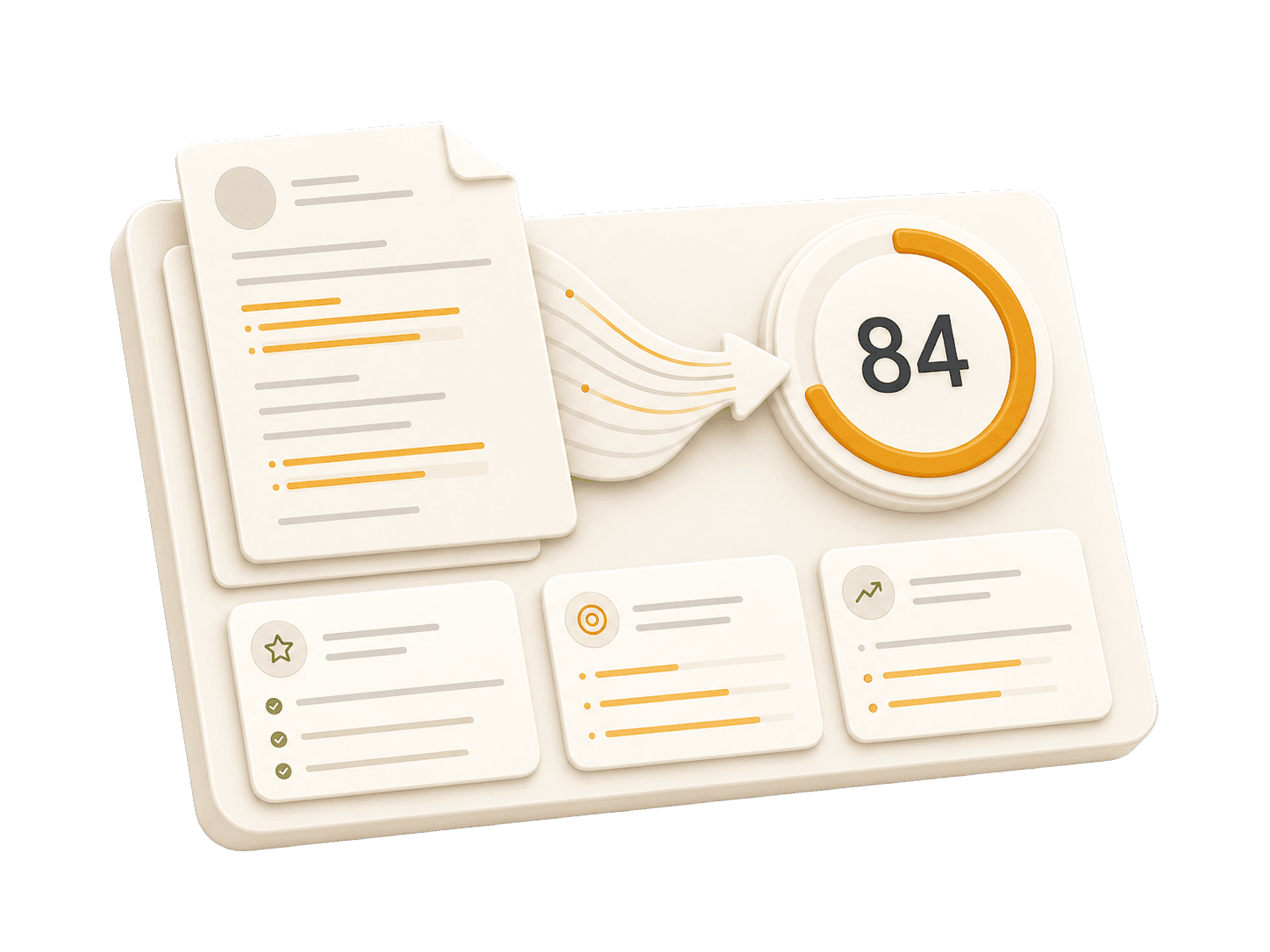
Add your resume to run a free score and get prioritized fixes.
Expert guidelines and best practices for each section of your resume.
01
First Name Last Name City, State, Zip Code Phone Number | Email Address LinkedIn Profile URL | Portfolio URL (Optional)
Your contact information is the first section recruiters see. Keep it concise and professional. Ensure your email address is appropriate (e.g., [email protected]). Include your LinkedIn profile for a comprehensive view of your professional journey. A portfolio or personal website is recommended for creative, technical, or design roles.
Do not include your full physical address (street number/name) for privacy reasons. Avoid including personal details like marital status, age, photo, or social security number unless specifically required in your country. Do NOT use unprofessional email addresses and do NOT include GitHub links for artists - use ArtStation, Behance, or portfolio sites instead.
See clear examples of how to format contact details effectively.
John Doe 1234 Random St, Apt 56 New York, NY 10001 [email protected] github.com/aliciacode
Alicia Chen Los Angeles, CA (555) 123-4567 | [email protected] linkedin.com/in/aliciachen
02
Professional Title Result-oriented [Role Name] with [Number] years of experience in [Key Skills/Industries]. Proven track record of [Major Achievement]. Skilled in [Key Technologies/Skills]. Committed to delivering [Specific Value] for [Target Industry/Company type].
A professional summary is your elevator pitch. It should be 3-5 sentences long, summarizing your experience, key skills, and major achievements. Tailor it to the job description by using relevant keywords. Focus on what makes you unique and the value you bring to potential employers.
Avoid generic objectives like 'Looking for a challenging role to grow my skills.' Recruiters want to know what value you bring to them, not what you want from them. Don't use first-person pronouns (I, me, my). Keep it concise and impactful.
Compare a weak objective with a strong professional summary.
Objective: I am a hard-working individual looking for a Community Manager position where I can learn new things and advance my career.
Senior Community Manager with over 9 years of experience in scaling niche communities into thriving ecosystems. Successfully increased engagement by 40% on high-traffic platforms. Skilled in AI-driven analytics, virtual event planning, and fostering cross-cultural connections.
03
Technical Skills - Languages: [List] - Frameworks: [List] - Tools: [List] Soft Skills - [Skill 1], [Skill 2], [Skill 3]
Group your skills logically (e.g., Languages, Frameworks, Tools). Focus on hard skills relevant to the job. List skills in order of proficiency or relevance. Soft skills are better demonstrated through bullet points in your experience section rather than a bare list.
Do not list skills you are not comfortable using in an interview. Avoid using progress bars or percentages to rate your skills (e.g., "Java: 80%"). Don't include outdated technologies unless specifically required.
Practical example showing do's and don'ts for skills
Discourse, Slack, Hootsuite, Google Analytics. Java: 80%, Python: Advanced
Community Engagement Tools: - Discourse - Slack - Hootsuite - Google Analytics
04
Job Title | Company Name | Location Month Year – Month Year - Action Verb + Context + Result (Quantified) - Led [Project] resulting in [Outcome]... - Collaborated with [Team] to implement [Feature]...
This is the core of your resume. Use reverse-chronological order (most recent first). Start each bullet with a strong action verb. Focus on achievements and impact, not just duties. Use numbers to quantify your impact (dollars, percentages, time saved, users affected). Show progression and increasing responsibility.
Avoid passive language like "Responsible for..." or "Tasked with...." Don't list every single daily task; focus on significant contributions and measurable outcomes. Avoid jargon that recruiters outside your field won't understand.
Practical example showing do's and don'ts for experiences
Responsible for managing the social media profiles of the company, which included posting regular updates, engaging with followers, and monitoring trends.
Managed social media profiles, increasing engagement by 50% through strategic content curation and proactive community interaction.
05
Degree Name | University Name | Location Month Year – Month Year - Relevant Coursework: [Course 1], [Course 2] - Honors/Awards: [Award Name] - GPA: X.X (if above 3.5)
List your highest degree first. If you have significant work experience, keep the education section brief. Include your GPA only if it is above 3.5 or if you are a recent graduate. Highlight relevant coursework, academic projects, honors, or leadership roles.
Do not include high school details if you have a college degree. Avoid listing every single course you took; select only the most relevant ones. Don't include graduation dates from decades ago if age discrimination is a concern in your field.
Practical example showing do's and don'ts for educations
Bachelor of Arts | University of California, San Francisco | San Francisco, CA January 2013 – June 2017 - Coursework: Introduction to Sociology, Economics, Calculus I, II & III, Environmental Science, Psychology, American History
Bachelor of Science in Communications | San Francisco State University | San Francisco, CA September 2013 – May 2017 - Relevant Coursework: Mass Media Theory, Digital Communication Strategies, Community Management and Engagement
06
Project Name | Tools/Technologies Used - Briefly describe what you created and its purpose - Highlight specific challenges you solved - Link to portfolio or demo if available
Projects are excellent for demonstrating practical skills, especially if you lack work experience or are changing careers. Include a link to your portfolio or demo if possible. Focus on projects that show problem-solving skills and relevant tools for the target role.
Don't include trivial tutorials unless you significantly expanded on them. Avoid projects that are outdated, incomplete, or irrelevant to the role you're applying for. Don't just list technologies—explain what you created and why it matters.
Practical example showing do's and don'ts for projects
Created a website using WordPress but did not provide details on the purpose or challenges faced. The project is incomplete and lacks a demo link.
Built an interactive community platform using Discourse, addressing user engagement issues by implementing gamification features. Successfully increased active users by 30% within six months.
Common questions about this role and how to best present it on your resume.
Highlight community strategy, moderation, member engagement, event planning, content planning, analytics, and the ability to turn user feedback into useful product or support insights.
Use realistic numbers tied to member growth, participation, response time, event attendance, retention, or feedback outcomes instead of listing only daily posting and moderation tasks.
Yes, when it supports the role. Connect social media work to community outcomes such as engagement quality, event attendance, education, member support, or brand trust.
Show a move from execution to ownership: content calendars, then community programs, then moderation systems, feedback loops, reporting, and cross-functional influence.
Transform your resume into an interview magnet with AI-powered optimization trusted by job seekers worldwide.
3 out of 4 resumes never reach a human eye. Our keyword optimization increases your pass rate by up to 80%, ensuring recruiters actually see your potential.