
Use this template
Add your own experience and make this layout yours.
Resume Example
David Harris
Chief Information Officer (CIO) | Enterprise Technology Strategy
[email protected] | +1 (503) 456-7890 | linkedin.com/in/david-harris-cio | davidharris.com | San Francisco, CA
Professional Summary
Chief Information Officer with 8+ years of senior IT leadership across cloud migration, cybersecurity governance, ERP modernization, and data strategy. Leads cross-functional technology teams, aligns infrastructure roadmaps with business priorities, and turns complex legacy environments into reliable, scalable platforms. Known for reducing operating costs, improving system performance, and translating technical risk into clear executive decisions.
Work Experience
Chief Information Officer
01/2022
Northstar Retail Group
San Francisco, CA
•
Led enterprise cloud migration across core business systems, lowering infrastructure operating costs by 30% while improving application response times by 50% over two years
•
Optimized data center operations through capacity planning, vendor consolidation, and energy-efficiency upgrades, saving $500K annually without reducing service availability
•
Strengthened cybersecurity governance by standardizing incident response, access controls, and risk reporting, reducing recurring security incidents over a two-year period
•
Built a digital transformation roadmap that prioritized ERP, analytics, and customer-facing platform upgrades against board-approved business goals
Chief Information Officer
06/2020 - 12/2021
HarborView Financial
San Francisco, CA
•
Implemented a data governance framework that improved reporting accuracy by 40% and gave finance, operations, and customer teams a shared source of truth
•
Directed cross-functional delivery of an ERP modernization program, reducing manual reconciliation errors by 50% and improving month-end close visibility
Director of IT Strategy
12/2017 - 05/2020
BrightPath Logistics
San Francisco, CA
•
Modernized legacy platforms into scalable cloud-ready services, reducing unplanned downtime by 90% and improving customer support response quality
•
Developed and tested a disaster recovery plan with clear recovery ownership, helping business teams maintain continuity during critical incidents
Skills
Cloud Computing (AWS, Azure), Data Analytics (Tableau, Power BI), Cybersecurity Solutions (Sophos, McAfee), IT Infrastructure Management, Strategic IT Planning, Digital Transformation Leadership, Project Management Methodologies, Stakeholder Engagement
Education
Master's Degree in Information Technology Management
09/2015 - 05/2017
University of XYZ
San Francisco, CA
Projects
Supply Chain Traceability Pilot
github.com/davidharris/supply-chain-traceability
Sponsored a blockchain proof of concept that tested supplier traceability, exception handling, and audit visibility for a multi-region supply chain team.
IoT Security Governance Framework
Created an IoT security governance framework covering device onboarding, network segmentation, monitoring, and vendor risk review for connected operations environments.
Certifications
Certified Information Systems Security Professional (CISSP)
06/2025
Project Management Professional (PMP)
08/2024
This resume format is highly effective for ATS (Applicant Tracking Systems) because it clearly outlines the candidate's professional experience and skills relevant to the Chief Information Officer role. The use of strong action verbs and quantifiable achievements enhances visibility in automated search processes, while also providing a compelling narrative for human reviewers. Additionally, including technical skills such as digital transformation strategy and IT project management ensures alignment with industry-specific requirements.
Instant Resume Score
Upload your resume for an instant ATS score and practical, role-specific improvements.
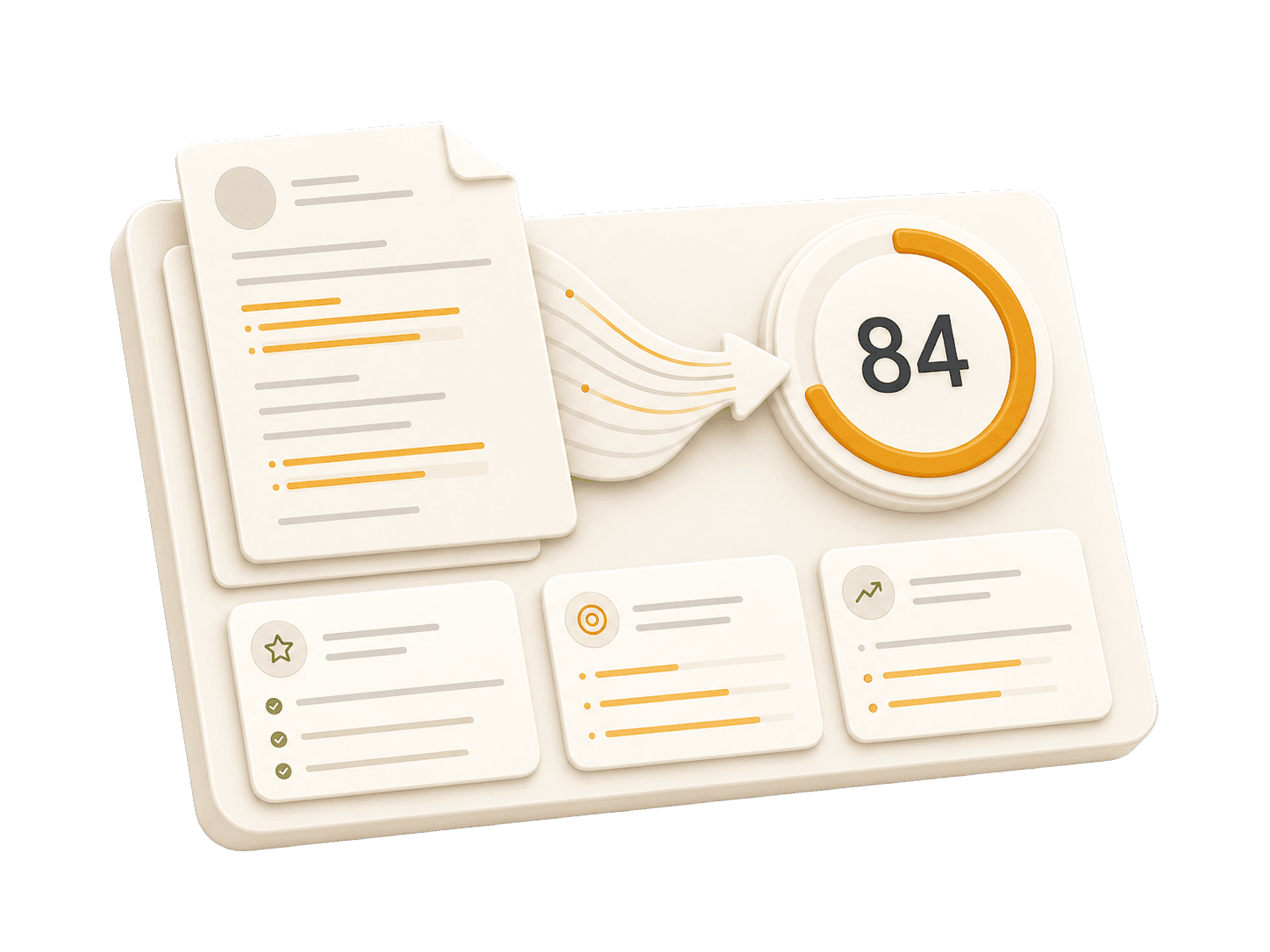
Add your resume to run a free score and get prioritized fixes.
Expert guidelines and best practices for each section of your resume.
01
First Name Last Name City, State, Zip Code Phone Number | Email Address LinkedIn Profile URL | Portfolio URL (Optional)
Your contact information is the first section recruiters see. Keep it concise and professional. Ensure your email address is appropriate (e.g., [email protected]). Include your LinkedIn profile for a comprehensive view of your professional journey. A portfolio or personal website is recommended for creative, technical, or design roles.
Do not include your full physical address (street number/name) for privacy reasons. Avoid including personal details like marital status, age, photo, or social security number unless specifically required in your country. Do not use unprofessional email addresses such as those from free webmail services.
See clear examples of how to format contact details effectively.
John Doe 1234 Random St, Apt 56 New York, NY 10001 [email protected] github.com/aliciacode
John Doe New York, NY (555) 123-4567 | [email protected] linkedin.com/in/johndoe
02
Professional Title Strategic [Role Name] with [Number] years leading [Key Programs] across [Industries]. Known for [Major Achievement] and skilled in [Key Technologies/Governance Areas]. Focused on turning technology investment into measurable business value.
A professional summary is your elevator pitch. It should be 3-5 sentences long, summarizing your experience, key skills, and major achievements. Tailor it to the job description by using relevant keywords. Focus on what makes you unique and the value you bring to potential employers.
Avoid generic objectives like 'Looking for a challenging role to grow my skills.' Recruiters want to know what value you bring to them, not what you want from them. Don't use first-person pronouns (I, me, my). Keep it concise and impactful.
Compare a weak objective with a strong professional summary.
Objective: I am a hard-working individual looking for a Chief Information Officer position where I can learn new things and advance my career.
Strategic leader in information technology management with over 8 years of experience. Successfully led the cloud migration initiative, reducing IT costs by 30% while improving system performance. Skilled in developing comprehensive cybersecurity frameworks and driving digital transformation through innovative technologies.
Showcase key achievements
I am a detail-oriented Chief Information Officer with extensive experience.
Over 10 years of IT leadership, spearheaded the transition to cloud-based services, resulting in a 25% reduction in infrastructure costs and a significant increase in operational efficiency. Expertise includes strategic planning, cybersecurity, and project management.
Highlight specific technologies
Seeking a CIO position to leverage my experience with various IT systems.
Adept Chief Information Officer with 7 years of hands-on experience in AWS, Azure, and Tableau. Led the implementation of advanced data analytics solutions that improved decision-making processes by 30% within six months.
Emphasize leadership qualities
A highly skilled CIO looking for a new challenge.
Strategic and visionary leader with over a decade of experience in IT management. Successfully led cross-functional teams to deliver digital transformation initiatives that enhanced business efficiency and customer satisfaction.
Demonstrate impact on the organization
Experienced CIO looking for opportunities to further my career.
Seasoned Chief Information Officer with 8+ years of experience. Implemented a comprehensive data governance framework that improved data accuracy by 40% and enhanced regulatory compliance across the organization.
03
Technical Skills - Languages: [List] - Frameworks: [List] - Tools: [List] Soft Skills - [Skill 1], [Skill 2], [Skill 3]
Group your skills logically (e.g., Languages, Frameworks, Tools). Focus on hard skills relevant to the job. List skills in order of proficiency or relevance. Soft skills are better demonstrated through bullet points in your experience section rather than a bare list.
Do not list skills you are not comfortable using in an interview. Avoid using progress bars or percentages to rate your skills (e.g., "Java: 80%"). Do not include outdated technologies unless specifically required.
Practical example showing do's and don'ts for skills
Outdated programming languages like COBOL, FORTRAN should be omitted unless they are relevant to your current role or job requirements.
List modern cloud computing tools such as AWS, Azure, and Google Cloud Platform.
04
Job Title | Company Name | Location Month Year – Month Year - Action Verb + Context + Result (Quantified) - Led [Project] resulting in [Outcome]... - Collaborated with [Team] to implement [Feature]...
This is the core of your resume. Use reverse-chronological order (most recent first). Start each bullet with a strong action verb. Focus on achievements and impact, not just duties. Use numbers to quantify your impact (dollars, percentages, time saved, users affected). Show progression and increasing responsibility.
Avoid passive language like "Responsible for..." or "Tasked with...." Don't list every single daily task; focus on significant contributions and measurable outcomes. Avoid jargon that recruiters outside your field won't understand.
Practical example showing do's and don'ts for experiences
Overseeing the IT security team.
Led a cross-functional team to develop a comprehensive cybersecurity protocol, resulting in a 75% decrease in security incidents over two years.
Managed daily operations of the data center.
Optimized data center operations, saving $500K annually through energy efficiency and resource management improvements.
05
Degree Name | University Name | Location Month Year – Month Year - Relevant Coursework: [Course 1], [Course 2] - Honors/Awards: [Award Name] - GPA: X.X (if above 3.5)
List your highest degree first. If you have significant work experience, keep the education section brief. Include your GPA only if it is above 3.5 or if you are a recent graduate. Highlight relevant coursework, academic projects, honors, or leadership roles.
Do not include high school details if you have a college degree. Avoid listing every single course you took; select only the most relevant ones. Don't include graduation dates from decades ago if age discrimination is a concern in your field.
Practical example showing do's and don'ts for educations
Bachelor of Science in Computer Engineering | ABC University, San Francisco, CA September 2008 – May 2013 - Courses: Introduction to Programming, Calculus I, II, III, Data Structures and Algorithms, Operating Systems
Master's Degree in Information Technology Management | University of XYZ, San Francisco, CA September 2015 – May 2017 - Relevant Coursework: Cloud Computing, Cybersecurity Strategies, Data Analytics, Strategic IT Management
06
Project Name | Tools/Technologies Used - Briefly describe what you created and its purpose - Highlight specific challenges you solved - Link to portfolio or demo if available
Projects are excellent for demonstrating practical skills, especially if you lack work experience or are changing careers. Include a link to your portfolio or demo if possible. Focus on projects that show problem-solving skills and relevant tools for the target role.
Don't include trivial tutorials unless you significantly expanded on them. Avoid projects that are outdated, incomplete, or irrelevant to the role you're applying for. Don't just list technologies—explain what you created and why it matters.
Practical example showing do's and don'ts for projects
Implemented a basic tutorial project on AWS S3, which involves setting up an object storage bucket with no additional functionalities or custom code.
Developed an automated disaster recovery system using AWS CloudFormation templates to ensure business continuity during system outages. The system included automated failover scripts and real-time monitoring.
Created a simple local website that lists basic information about my personal interests without any advanced features or integration.
Built an enterprise resource planning (ERP) system for a small business client using Microsoft Dynamics 365, integrating finance, sales, and supply chain management modules to streamline operations.
Wrote several lines of code in Python without forming a coherent project or solving any specific problem.
Designed and deployed a machine learning model on AWS SageMaker that predicts customer churn based on historical data. The model was integrated into an existing CRM system to provide actionable insights.
Common questions about this role and how to best present it on your resume.
Emphasize enterprise technology strategy, leadership scope, budget or vendor ownership, risk management, and measurable outcomes such as cost savings, uptime, security improvements, or faster delivery.
Connect each transformation initiative to a business goal. Name the platform or program, explain your leadership role, and show the result in terms of cost, reliability, adoption, data quality, or customer impact.
Yes, but keep them executive-level and relevant. Include cloud platforms, cybersecurity governance, data analytics, ERP systems, IT service management, vendor management, and architecture strategy when they match the role.
Focus on the last 10 to 15 years and prioritize roles that show increasing responsibility. Earlier technical roles can be summarized briefly if they support the leadership story.
Join thousands who transformed their careers with AI-powered resumes that pass ATS and impress hiring managers.
Job seekers using professional, AI-enhanced resumes land roles in an average of 5 weeks compared to the standard 10. Stop waiting and start interviewing.