
Use this template
Add your own experience and make this layout yours.
Resume Example
Emily Watson
Senior Assistive Technology Specialist
[email protected] | +1 (555) 456-7890 | linkedin.com/in/emily-watson | emilywatson.net | San Francisco, CA
Professional Summary
Assistive Technology Specialist with 6+ years of experience improving accessible web and mobile experiences for users with disabilities. Skilled in WCAG testing, screen reader validation, ARIA implementation reviews, voice recognition workflows, and client training. Known for translating accessibility findings into practical fixes that help product, support, and design teams reduce barriers without overstating technical claims.
Work Experience
Senior Assistive Technology Specialist
01/2022
Tech Company Inc
San Francisco, CA
•
Evaluated web and mobile accessibility flows with NVDA, JAWS, VoiceOver, keyboard-only navigation, and WCAG checklists, giving product teams clear remediation notes.
•
Partnered with engineering and design teams to improve forms, menus, focus states, labels, and error messaging for users relying on assistive technologies.
•
Configured screen reader and voice recognition workflows so 20 new users could complete core web tasks independently during onboarding.
•
Created client training guides and troubleshooting checklists that reduced repeat support questions during assistive technology rollouts.
Assistive Technology Specialist
06/2020 - 12/2021
AccessTech Solutions
San Francisco, CA
•
Triaged voice command defects with QA and support teams, shortening manual adjustment work for recurring user profiles.
•
Documented speech recognition edge cases for users with varied accents, helping engineers tune prompts, commands, and fallback instructions.
Accessibility Engineer
12/2018 - 05/2020
InclusiveTech Corp
San Francisco, CA
•
Led a project to improve website navigation for users with visual impairments, resulting in a 25% increase in site usability.
•
Created and deployed 10+ training modules on assistive technology for a new client, leading to an immediate increase in adoption rates.
Skills
Voice Recognition Software, Screen Reader Compatibility, Mobile App Accessibility Features, AI-Driven Speech Recognition, Training Material Development, Client Onboarding Processes, End-User Support Systems, Project Lifecycle Management
Education
Master’s in Rehabilitation Science
09/2013 - 05/2016
University of XYZ
San Francisco, CA
Projects
Aging in Place App Prototype
Built a prototype app to help older adults manage daily tasks, medication reminders, and appointments with large tap targets, voice input, and simplified navigation.
Inclusive Gaming Initiative
Organized an inclusive game jam where teams tested adaptive controls, captions, and voice commands with accessibility feedback before final demos.
Certifications
Certified Accessibility Specialist
06/2025
AI Ethics for Assistive Technologies
09/2024
This resume format is highly effective for Assistive Technology Specialists because it clearly outlines the candidate's experience and skills in a manner that aligns with industry standards. The use of relevant keywords ensures that the document passes through Applicant Tracking Systems (ATS) seamlessly, highlighting key areas such as accessibility design principles, user interface development, and inclusive technology solutions. Moreover, by including specific achievements related to enhancing web and software accessibility for diverse populations, the resume demonstrates a candidate's practical application of theoretical knowledge, making it stand out among competitors.
Instant Resume Score
Upload your resume for an instant ATS score and practical, role-specific improvements.
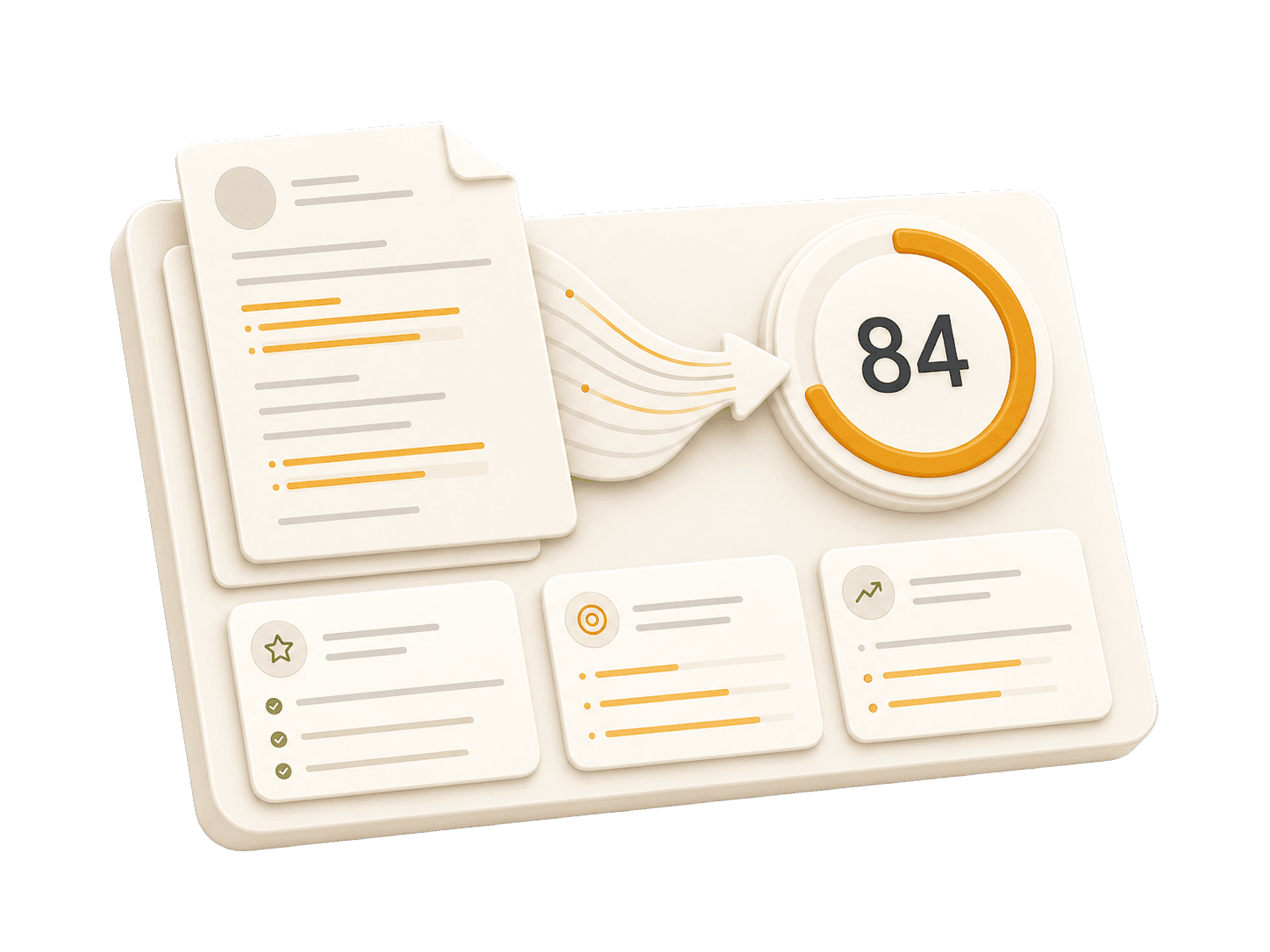
Add your resume to run a free score and get prioritized fixes.
Expert guidelines and best practices for each section of your resume.
01
First Name Last Name City, State, Zip Code Phone Number | Email Address LinkedIn Profile URL | Portfolio URL (Optional)
Your contact information is the first section recruiters see. Keep it concise and professional. Ensure your email address is appropriate (e.g., [email protected]). Include your LinkedIn profile for a comprehensive view of your professional journey. A portfolio or personal website is recommended for creative, technical, or design roles.
Do not include your full physical address (street number/name) for privacy reasons. Avoid including personal details like marital status, age, photo, or social security number unless specifically required in your country. Do NOT use unprofessional email addresses. For artists and designers, do NOT include GitHub links; instead, use ArtStation, Behance, or portfolio sites.
See clear examples of how to format contact details effectively.
John Doe 1234 Random St, Apt 56 New York, NY 10001 [email protected] github.com/aliciacode Single, 28 years old
Emily Watson San Francisco, CA (555) 456-7890 | [email protected] linkedin.com/in/emily-watson | portfolio.example.com
02
Professional Title
Result-oriented [Role Name] with [Number] years of experience in [Key Skills/Industries]. Proven track record of [Major Achievement]. Skilled in [Key Technologies/Skills]. Committed to delivering [Specific Value] for [Target Industry/Company type].
A professional summary is your elevator pitch. It should be 3-5 sentences long, summarizing your experience, key skills, and major achievements. Tailor it to the job description by using relevant keywords. Focus on what makes you unique and the value you bring to potential employers.
Avoid generic objectives like 'Looking for a challenging role to grow my skills.' Recruiters want to know what value you bring to them, not what you want from them. Don't use first-person pronouns (I, me, my). Keep it concise and impactful.
Compare a weak objective with a strong professional summary.
Objective: I am a hard-working individual looking for a Assistive Technology Specialist position where I can learn new things and advance my career.
Senior Assistive Technology Specialist with 6+ years of experience improving accessible web and mobile experiences. Skilled in WCAG testing, screen reader validation, ARIA implementation reviews, and assistive technology training. Helped 20 new users complete core web tasks independently by configuring screen reader and voice recognition workflows.
03
Technical Skills
Soft Skills
Group your skills logically (e.g., Languages, Frameworks, Tools). Focus on hard skills relevant to the job. List skills in order of proficiency or relevance. Soft skills are better demonstrated through bullet points in your experience section rather than a bare list.
Do not list skills you are not comfortable using in an interview. Avoid using progress bars or percentages to rate your skills (e.g., "Java: 80%"). Don't include outdated technologies unless specifically required.
Voice Recognition Software, Java, C++, Python
Voice Recognition Software: Nuance Dragon NaturallySpeaking; Languages: Python, JavaScript
04
Job Title | Company Name | Location Month Year – Month Year
This is the core of your resume. Use reverse-chronological order (most recent first). Start each bullet with a strong action verb. Focus on achievements and impact, not just duties. Use numbers to quantify your impact (dollars, percentages, time saved, users affected). Show progression and increasing responsibility.
Avoid passive language like "Responsible for..." or "Tasked with...." Don't list every single daily task; focus on significant contributions and measurable outcomes. Avoid jargon that recruiters outside your field won't understand.
Practical example showing do's and don'ts for experiences
Responsible for managing assistive technology support systems, ensuring clients' needs are met.
Audited checkout, account, and support flows with screen readers and keyboard-only navigation, giving engineers prioritized WCAG remediation notes.
Assisted with training sessions and workshops on new assistive technology tools.
Developed user training guides for speech recognition and screen reader workflows, reducing repeat support questions during onboarding.
05
Degree Name | University Name | Location Month Year – Month Year
List your highest degree first. If you have significant work experience, keep the education section brief. Include your GPA only if it is above 3.5 or if you are a recent graduate. Highlight relevant coursework, academic projects, honors, or leadership roles.
Do not include high school details if you have a college degree. Avoid listing every single course you took; select only the most relevant ones. Don't include graduation dates from decades ago if age discrimination is a concern in your field.
Bachelor of Arts | XYZ University | New York, NY September 2010 – May 2014
Master’s in Rehabilitation Science | University of XYZ | San Francisco, CA September 2013 – May 2016
06
Project Name | Tools/Technologies Used
Projects are excellent for demonstrating practical skills, especially if you lack work experience or are changing careers. Include a link to your portfolio or demo if possible. Focus on projects that show problem-solving skills and relevant tools for the target role.
Don't include trivial tutorials unless you significantly expanded on them. Avoid projects that are outdated, incomplete, or irrelevant to the role you're applying for. Don't just list technologies—explain what you created and why it matters.
Practical example showing do's and don'ts for projects
Developed a basic calculator app using HTML, CSS, JavaScript
Created an accessible calendar application with voice commands for users with motor impairments
Common questions about this role and how to best present it on your resume.
Show hands-on experience with accessibility testing, adaptive software and hardware, user training, documentation, and collaboration with product or support teams. Include tools such as screen readers, voice recognition software, WCAG, ARIA, and keyboard testing when they match your background.
Tie each bullet to the user problem, the tool or method you used, and the outcome. For example, explain whether you improved onboarding, reduced repeat support questions, fixed keyboard navigation issues, or helped users complete tasks independently.
A degree in assistive technology or a related field is common, along with certifications like ATP (Assistive Technology Professional) and experience working with AT software and devices.
Include projects where you designed solutions tailored to individual users' needs, focusing on the unique challenges each client faced and how your designs addressed them effectively.
In minutes, create a tailored, ATS-friendly resume proven to land 6X more interviews.
Candidates who tailor their resumes to the job description get 2.5x more interviews. Use our AI to auto-tailor your CV for every single application instantly.