
Use this template
Add your own experience and make this layout yours.
Resume Example
Alexander Martinez
Senior AI Hardware Engineer
[email protected] | +1 (408) 567-9012 | linkedin.com/in/alexander-martinez-hwengineer | github.com/amhardwaregenius | am-engineering.dev | San Jose, CA
Professional Summary
AI Hardware Engineer with 5+ years of experience designing inference accelerators, FPGA prototypes, and power-aware chip architectures for high-performance computing and edge AI workloads. Works closely with ML, systems, and verification teams to turn model requirements into manufacturable hardware. Strong background in SystemVerilog, Verilog, timing closure, lab bring-up, and performance-per-watt optimization.
Work Experience
Senior AI Hardware Engineer
01/2022
Tech Company Inc
San Francisco, CA
•
Profiled compute and memory bottlenecks in an inference accelerator, then updated RTL and on-chip buffering strategy to improve throughput by 22% on server-class workloads.
•
Implemented DVFS and power-gating controls for high-utilization blocks, lowering sustained board power by 18% without missing latency targets.
•
Partnered with packaging and thermal teams on a denser accelerator module design, improving sustained clock stability under long-running inference loads.
•
Led architecture reviews and pre-silicon validation for memory and interconnect changes, resolving five high-risk issues before tape-out.
AI Hardware Engineer
06/2020 - 12/2021
Innovatech Solutions
San Francisco, CA
•
Built an FPGA-based prototype of a matrix-math accelerator, giving software teams earlier access to performance data and reducing bring-up risk for the ASIC program.
•
Worked with compiler, firmware, and platform engineers to integrate accelerator interfaces into existing systems, reducing data-movement bottlenecks during real-time inference.
Hardware Engineering Intern
06/2019 - 08/2019
Tech Innovations Inc
San Jose, CA
•
Created Verilog testbenches and lab automation scripts for AI chip subsystem validation, supporting successful prototype bring-up.
•
Maintained design and validation documentation for chip blocks, making review cycles faster and handoffs clearer across the team.
Skills
Verilog, SystemVerilog, Python, C/C++, Cadence Virtuoso, Synopsys Design Compiler, Mentor Graphics Calibre, FPGA Development
Education
Master of Science in Electrical Engineering with Specialization in Computer Engineering
09/2014 - 05/2017
Stanford University
Palo Alto, CA
Projects
Neuromorphic Computing Research Project
github.com/amhardwaregenius/neuromorphic-research
Designed an FPGA-based neuromorphic inference pipeline for event-driven sensor data, comparing latency, memory access, and power tradeoffs across spiking and conventional accelerator blocks.
Quantum-Dot Cellular Automata (QCA) Prototype
Built and simulated a QCA logic prototype to evaluate ultra-low-power switching concepts for future AI hardware, documenting routing constraints and practical scaling limits.
Certifications
Advanced Design Verification Techniques
06/2024
Neural Network Accelerator Design Workshop
03/2025
This resume format is tailored specifically for AI Hardware Engineers by highlighting key technical skills and experiences relevant to the field. It utilizes common ATS (Applicant Tracking System) keywords such as 'AI hardware engineer,' 'high performance computing,' and 'AI chip design' ensuring that it ranks high in job board searches. The professional summaries and titles are crafted to emphasize Alexander's deep expertise in custom AI chip architecture, making him stand out among other candidates while remaining easily digestible for both human reviewers and automated systems.
Instant Resume Score
Upload your resume for an instant ATS score and practical, role-specific improvements.
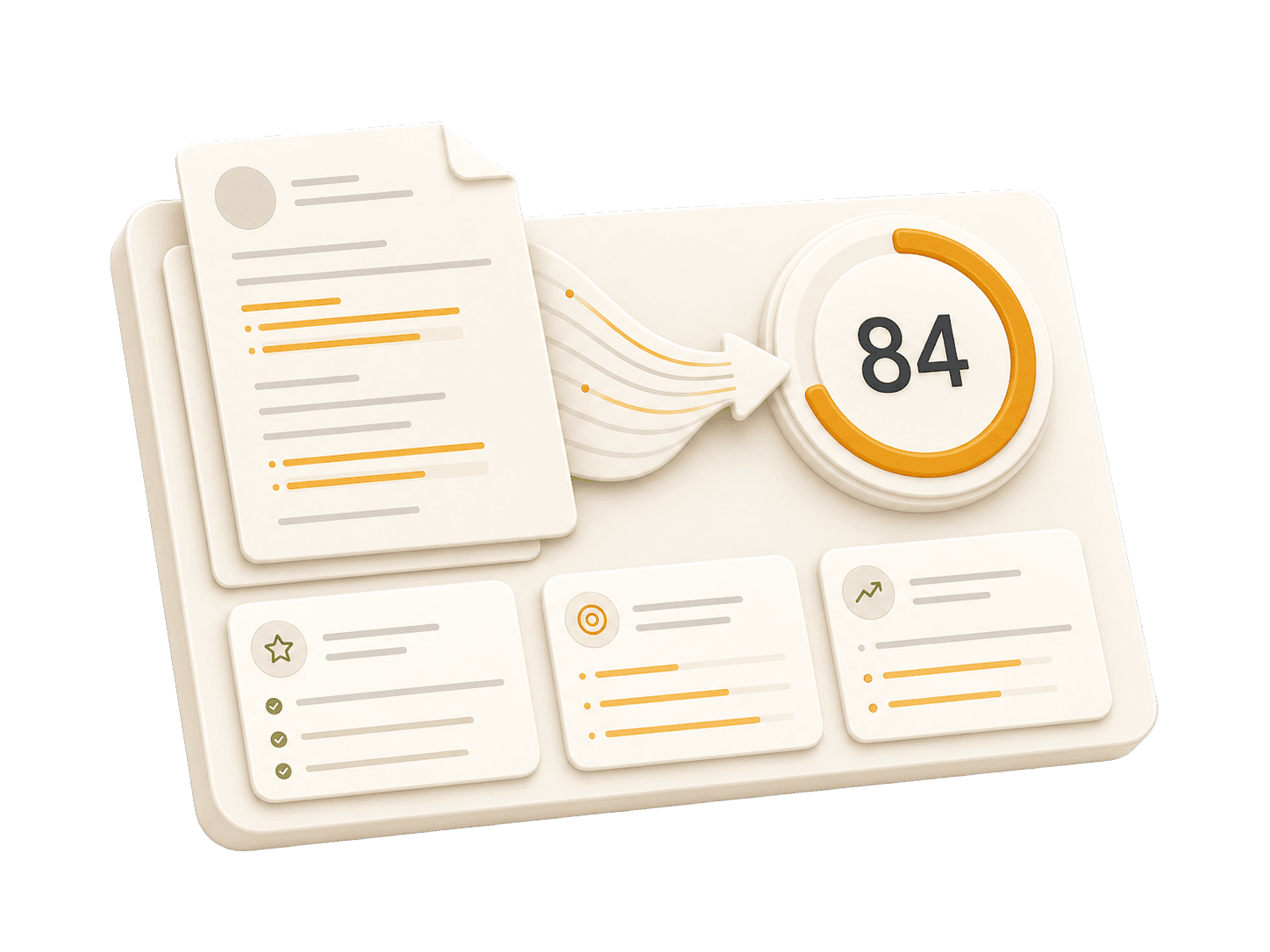
Add your resume to run a free score and get prioritized fixes.
Expert guidelines and best practices for each section of your resume.
01
First Name Last Name City, State, Zip Code Phone Number | Email Address LinkedIn Profile URL | Portfolio URL (Optional)
Your contact information is the first section recruiters see. Keep it concise and professional. Ensure your email address is appropriate (e.g., [email protected]). Include your LinkedIn profile for a comprehensive view of your professional journey. A portfolio or personal website is recommended for creative, technical, or design roles.
Do not include your full physical address (street number/name) for privacy reasons. Avoid including personal details like marital status, age, photo, or social security number unless specifically required in your country. Do NOT use unprofessional email addresses such as those from free webmail services like Yahoo! or Hotmail. For artists and designers, do not include GitHub links; instead, use ArtStation, Behance, or similar portfolio sites.
See clear examples of how to format contact details effectively.
John Doe 1234 Random St, Apt 56 New York, NY 10001 [email protected] github.com/aliciacode Single, 28 years old
Alicia Chen Los Angeles, CA (555) 123-4567 | [email protected] linkedin.com/in/aliciachen | artstation.com/aliciachen
Jane Smith P.O. Box 98765 San Francisco, CA 94105 [email protected]
Jane Doe San Francisco, CA (555) 555-5555 | [email protected] linkedin.com/in/janedoe
02
Professional Title
Result-oriented [Role Name] with [Number] years of experience in [Key Skills/Industries]. Proven track record of [Major Achievement]. Skilled in [Key Technologies/Skills]. Committed to delivering [Specific Value] for [Target Industry/Company type].
A professional summary is your elevator pitch. It should be 3-5 sentences long, summarizing your experience, key skills, and major achievements. Tailor it to the job description by using relevant keywords. Focus on what makes you unique and the value you bring to potential employers.
Avoid generic objectives like 'Looking for a challenging role to grow my skills.' Recruiters want to know what value you bring to them, not what you want from them. Don't use first-person pronouns (I, me, my). Keep it concise and impactful.
Compare a weak objective with a strong professional summary.
Objective: I am a hard-working individual looking for a AI Hardware Engineer position where I can learn new things and advance my career.
Senior AI Chip Architect with 6+ years of experience in designing custom AI chips. Reduced latency by 30% on GPU server line, achieving market leadership. Expert in FPGA development and cooling solutions.
03
Technical Skills
Soft Skills
Group your skills logically (e.g., Languages, Frameworks, Tools). Focus on hard skills relevant to the job. List skills in order of proficiency or relevance. Soft skills are better demonstrated through bullet points in your experience section rather than a bare list.
Do not list skills you are not comfortable using in an interview. Avoid using progress bars or percentages to rate your skills (e.g., "Java: 80%"). Do not include outdated technologies unless specifically required.
C++: Intermediate, Verilog: Beginner, Python: Novice
Python, C++, Verilog
Outdated hardware design tools such as Tanner Tools or Cadence Allegro 2010
Latest versions of Synopsys Design Compiler and Mentor Graphics Calibre for current projects.
04
Job Title | Company Name | Location Month Year – Month Year
This is the core of your resume. Use reverse-chronological order (most recent first). Start each bullet with a strong action verb. Focus on achievements and impact, not just duties. Use numbers to quantify your impact (dollars, percentages, time saved, users affected). Show progression and increasing responsibility.
Avoid passive language like "Responsible for..." or "Tasked with...." Don't list every single daily task; focus on significant contributions and measurable outcomes. Avoid jargon that recruiters outside your field won't understand.
Practical example showing do's and don'ts for experiences
Responsible for the design of AI chips, which helped increase performance by some percentage.
Led the redesign of legacy AI hardware into next-generation chips, achieving a 40% improvement in deep learning inference.
Performed daily tasks including data analysis and report writing to aid in project development.
Developed power management features that reduced chip power consumption by 30% without compromising performance.
05
Degree Name | University Name | Location Month Year – Month Year
List your highest degree first. If you have significant work experience, keep the education section brief. Include your GPA only if it is above 3.5 or if you are a recent graduate. Highlight relevant coursework, academic projects, honors, or leadership roles.
Do not include high school details if you have a college degree. Avoid listing every single course you took; select only the most relevant ones. Don't include graduation dates from decades ago if age discrimination is a concern in your field.
Practical example showing do's and don'ts for educations
Master of Science in Electrical Engineering | University of California, San Diego | San Diego, CA September 2014 – June 2017
Master of Science in Electrical Engineering with Specialization in Computer Engineering | Stanford University | Palo Alto, CA September 2014 – May 2017
06
Project Name | Technologies Used
Projects are excellent for demonstrating practical skills, especially if you lack work experience or are changing careers. Include a link to the GitHub repo or live demo if possible. Focus on projects that show problem-solving skills and relevant technologies for the target role.
Don't include trivial tutorials unless you significantly expanded on them. Avoid projects that are outdated, incomplete, or irrelevant to the role you're applying for. Don't just list technologies—explain what you built and why it matters.
Practical example showing do's and don'ts for projects
Created a basic AI chip using generic design rules with no specific details or challenges solved.
Developed an optimized custom AI chip that reduced power consumption by 25% while maintaining performance, utilizing Cadence Virtuoso and Verilog. The project involved overcoming the challenge of balancing low-power requirements with high-performance demands.
Common questions about this role and how to best present it on your resume.
Show a mix of hardware design, verification, and system-level skills. Strong examples include RTL design, FPGA prototyping, timing closure, performance analysis, memory architecture, and collaboration with ML or software teams.
Describe how you translated model or workload requirements into hardware decisions. Mention work with compiler, firmware, ML, or platform teams when you improved throughput, latency, power, or bring-up readiness.
Projects that show accelerator design, FPGA implementation, model inference optimization, or low-power architecture decisions are strong choices. Focus on the technical tradeoffs you handled, not just the tools you used.
Yes, when they are accurate and easy to explain. Metrics such as throughput gains, reduced latency, lower power draw, or faster validation cycles help recruiters understand the impact of your work.
Transform your resume into an interview magnet with AI-powered optimization trusted by job seekers worldwide.
3 out of 4 resumes never reach a human eye. Our keyword optimization increases your pass rate by up to 80%, ensuring recruiters actually see your potential.