Career Anxiety: How to Recognize It and What to Do Next

Mona Minaie
Author
Career anxiety is ongoing worry about your job, future, or next move. Learn how to tell it apart from normal work stress, identify the cause, and take practical steps to regain clarity.
Career Anxiety: What It Is and What to Do Next
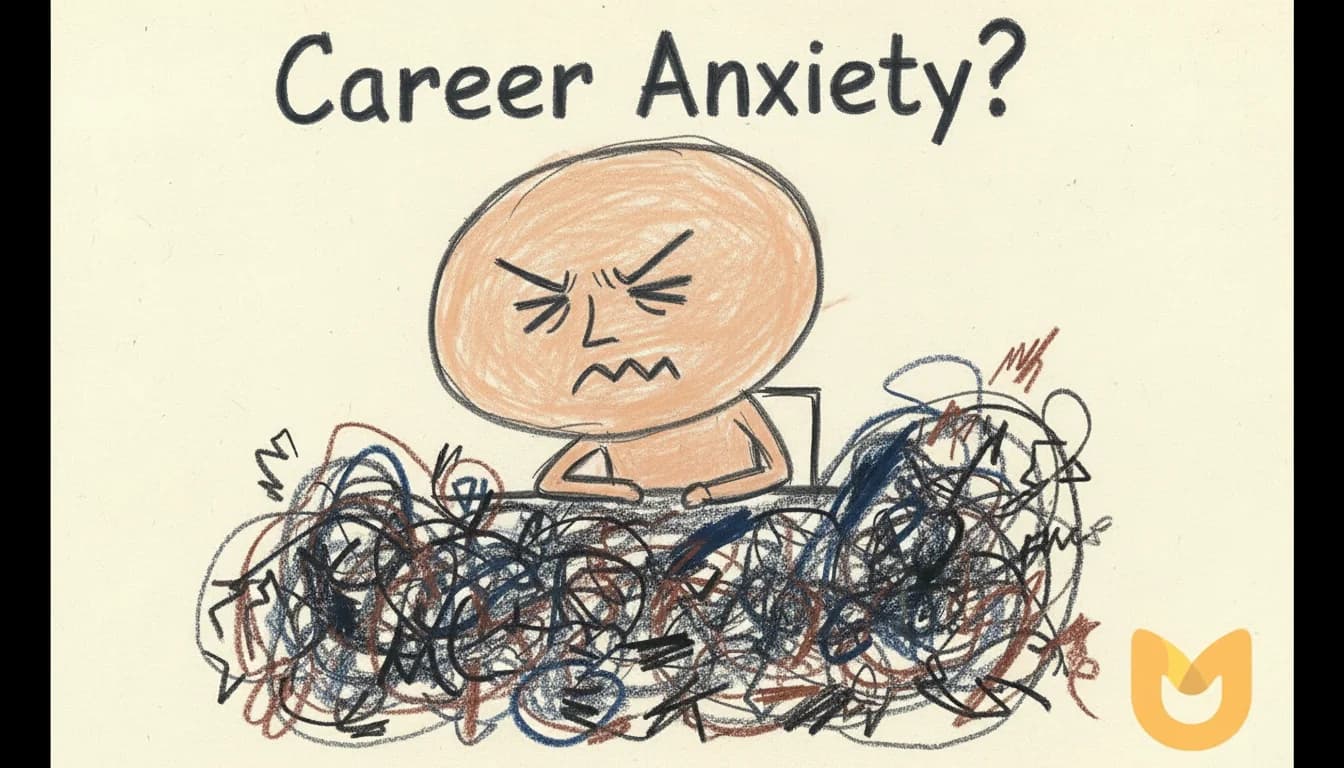
Career anxiety is ongoing worry about your job, career direction, or next move. It goes beyond a stressful week because the worry keeps coming back, affects decisions outside work, and can leave you stuck between staying, changing roles, or applying elsewhere. If that sounds familiar, the first step is not to make a rushed career decision. It is to identify what your anxiety is actually reacting to.
Career Anxiety vs. Normal Job Stress
Normal job stress is usually tied to a clear trigger, such as a deadline, a difficult project, or a tense meeting. It often eases once the situation passes.
Career anxiety is broader and more persistent. You might:
- dread thinking about your long-term future
- second-guess every work decision
- feel tense even when your workload is manageable
- avoid applying for jobs because every option feels risky
One simple check is to ask yourself: is this worry about one hard week, or does it keep following me no matter what task is in front of me?
Common Causes of Career Anxiety
Burnout or chronic overload
If your workload has been too high for too long, anxiety can be your mind's way of signaling that your current pace is not sustainable.
Unclear career fit
Sometimes the anxiety comes from a mismatch between the role and what you want. You may be able to do the work, but still feel detached, restless, or trapped.
Financial pressure or job insecurity
Layoff concerns, debt, or the fear of losing income can make every career choice feel more urgent than it is.
Comparison and outside pressure
Seeing other people get promoted, switch industries, or post polished updates online can make your own progress feel smaller than it is.
Low confidence during a job search
Career anxiety often spikes when your resume is not getting callbacks, interviews feel high stakes, or you are unsure how to present your experience for the roles you want.
What to Do When Career Anxiety Shows Up
1. Name the exact fear
Write down the sentence behind the anxiety. For example:
- "I'm afraid I'm falling behind."
- "I'm afraid I need a new job but don't know where to start."
- "I'm afraid my resume is too weak for the roles I want."
Specific fears are easier to work with than a general feeling of panic.
2. Separate the problem from the story
Try to distinguish facts from assumptions.
- Fact: "My manager has changed my priorities three times this month."
- Story: "This means my career is going nowhere."
This does not minimize the problem. It helps you respond to the part you can actually address.
3. Pick one practical next step
Do not try to solve your entire career at once. Choose the next useful action, such as:
- updating your resume for one target role
- asking for clarity on priorities at work
- blocking time to research adjacent roles
- talking to a mentor, manager, or career coach
Progress usually lowers anxiety faster than more rumination.
4. Reduce avoidable pressure
If social media, late-night job searching, or constant comparison is making your anxiety worse, set limits around it for a week and notice the difference.
5. Get support when the anxiety affects daily life
If worry about work is affecting sleep, concentration, relationships, or your ability to function, it may be time to talk to a licensed mental health professional. Career advice can help with decisions, but mental health support is the right step when anxiety becomes overwhelming.
A Simple Example
Imagine you keep telling yourself that you need to quit immediately. After stepping back, you realize the real issue is not your whole career. It is that your current role has unclear expectations, and your resume has not been updated in two years. That leads to a calmer plan:
- clarify expectations in your current role
- refresh your resume around the jobs you actually want
- apply to a small number of relevant roles instead of doom-scrolling job boards
That kind of clarity often reduces anxiety because the problem becomes actionable.
Frequently Asked Questions
Is career anxiety the same as hating your job?
No. You can like parts of your job and still feel anxious about growth, stability, fit, or your next move.
Can changing jobs fix career anxiety?
Sometimes, but not always. A new job can help if the anxiety comes from a poor role fit, toxic environment, or lack of growth. If the anxiety comes from burnout, perfectionism, or constant comparison, those patterns may follow you unless you address them directly.
What if my job search is making the anxiety worse?
Shrink the process. Focus on one target role, tailor your resume to that role, and track only the applications that genuinely fit. A smaller, clearer search is usually easier to manage than applying everywhere at once.


