Can You Wear Jeans to an Interview? Dress Code Rules

Masoud Rezakhnnlo
Author
Jeans can work for some casual interviews, but only when they are dark, clean, and styled professionally. Use this guide to decide when denim is safe and when business casual or formal attire is smarter.
Can You Wear Jeans to an Interview?
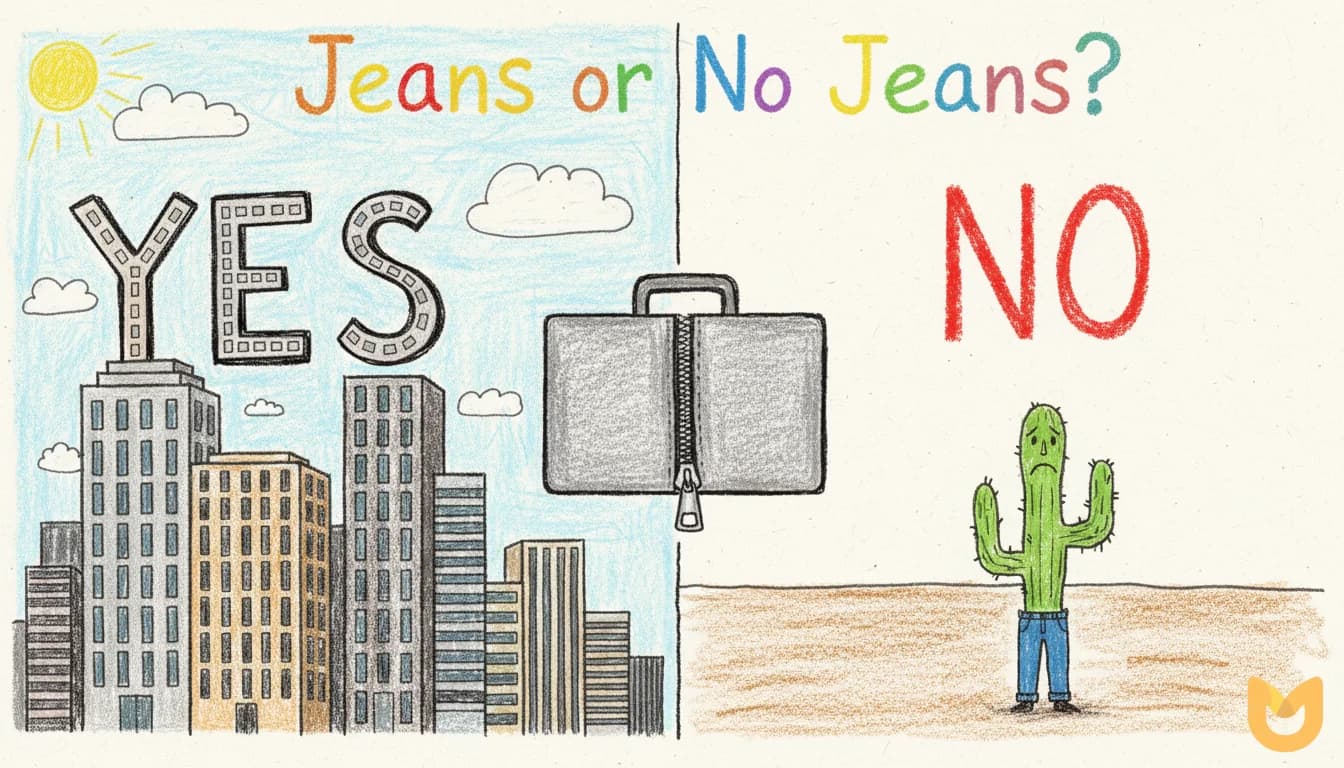
You can wear jeans to a job interview only when the setting is clearly casual and the jeans still look polished. If the invitation, recruiter, company photos, or industry norms do not make that clear, choose business casual instead: chinos, dress pants, a skirt, or a simple dress will usually feel safer than denim.
The goal is not to look expensive or overly formal. It is to look prepared, respectful, and focused on the conversation rather than your outfit.
The Quick Decision Rule
Jeans may be reasonable when the company has a relaxed dress code, the role is in a casual workplace, or the interview is for a creative, tech, retail, hospitality, trade, startup, or field-based position where polished denim is normal.
Skip jeans when you are interviewing for finance, law, consulting, government, executive roles, formal corporate roles, or any position where you will represent the company to conservative clients. Also skip them if the interview invitation says business professional, formal, or business attire.
If you cannot tell, do not make jeans your test case. Dress one step more polished than the everyday workplace.
How to Check the Dress Code Without Overthinking It
Start with the interview email. If it names a dress code, follow it. If it does not, look at the company website, careers page, LinkedIn photos, and recent team photos. You are looking for what employees wear in normal work settings, not just staged brand photos.
It is also fine to ask the recruiter or coordinator a simple question: "Is there a preferred dress code for the interview?" That sounds prepared, not needy. Asking is better than guessing when the workplace is unfamiliar.
How to Make Jeans Interview-Appropriate
If you decide jeans fit the context, choose dark blue, black, or very clean straight-leg denim. Avoid ripped, frayed, faded, baggy, overly tight, low-rise, or heavily distressed styles. The jeans should look intentional, not like weekend clothes.
Pair them with a structured top: a button-down shirt, blouse, fine knit, blazer, cardigan, or smart jacket. Choose clean closed-toe shoes, simple accessories, and a neat bag or portfolio. A plain T-shirt, hoodie, flip-flops, dirty sneakers, or loud graphics will pull the outfit too casual for most interviews.
Safer Alternatives When You Are Unsure
Business casual is the safest middle ground for most interviews. Try chinos, tailored trousers, a knee-length skirt, a simple dress, or dark non-denim pants with a neat top. Add a blazer or structured layer if the role is more client-facing or senior.
This approach lets you look professional without feeling overdressed. It also keeps the interviewer focused on your experience, examples, and fit for the role.
Interview Outfit Checklist
Before you leave or join a video call, check the basics:
- Clothes are clean, wrinkle-free, and comfortable when you sit.
- Shoes are clean and match the level of the outfit.
- Nothing has rips, slogans, stains, or distracting logos.
- Your outfit fits the industry, role, and interview format.
- You can move naturally and focus on your answers.
A good interview outfit should disappear into the background once the conversation starts.
Frequently Asked Questions
Is it unprofessional to wear jeans to an interview?
Not always. Dark, clean jeans can be acceptable in casual workplaces, but they are still riskier than business casual if you do not know the company culture. When in doubt, avoid denim.
Can I wear black jeans to an interview?
Black jeans are usually the safest denim option because they look more polished than light blue jeans. They still need to be clean, simple, well-fitting, and paired with a professional top and shoes.
Should I ask about the interview dress code?
Yes, especially when the company culture is unclear. Ask the recruiter or coordinator if there is a preferred dress code for the interview. Keep the question brief and practical.
What should I wear instead of jeans?
Choose chinos, dress pants, a skirt, a simple dress, or dark non-denim trousers. Add a button-down shirt, blouse, knit top, blazer, or cardigan depending on how formal the role is.


